
Ecosystem Management Decision Support
Spatial decision support for environmental planning
Assess landscape condition. Compare management priorities. Trace the evidence behind your decisions.
Optional local AI assistance For QGIS on Windows
A clear path from data to decisions.
Connect spatial data with explicit models, then explore both the results and the reasoning behind them.
Bring your data
Organize your study area, spatial layers, and assessment inputs in a workspace.
Assess condition
Use knowledge models to evaluate how well landscape conditions meet your criteria.
Compare priorities
Combine assessment results with decision criteria to rank management alternatives.
Explain the evidence
Review the models, inputs, and results that support your planning decisions.
One watershed. A complete decision workflow.
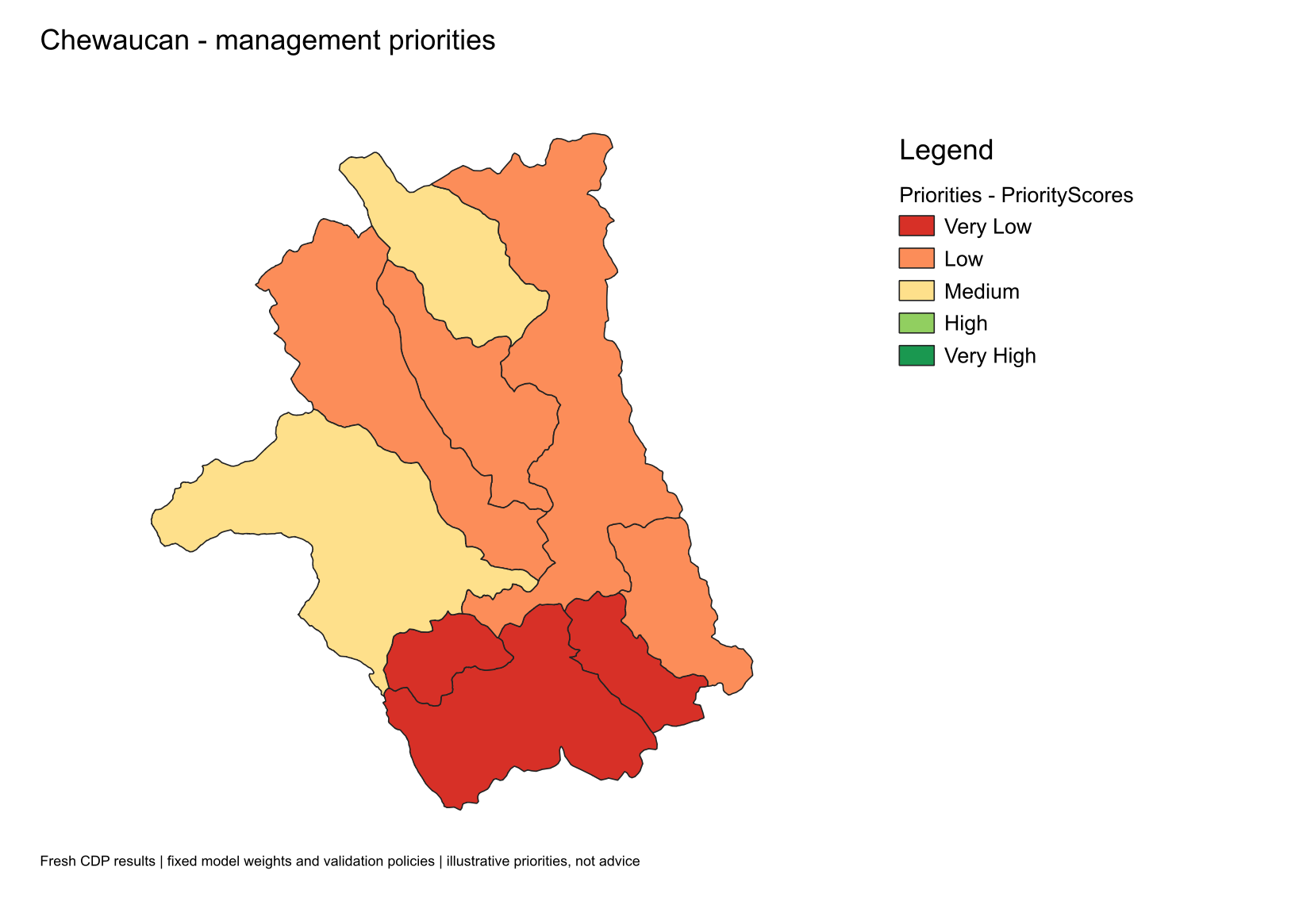
Follow the Chewaucan teaching example in QGIS, from a NetWeaver condition assessment to CDP management priorities.
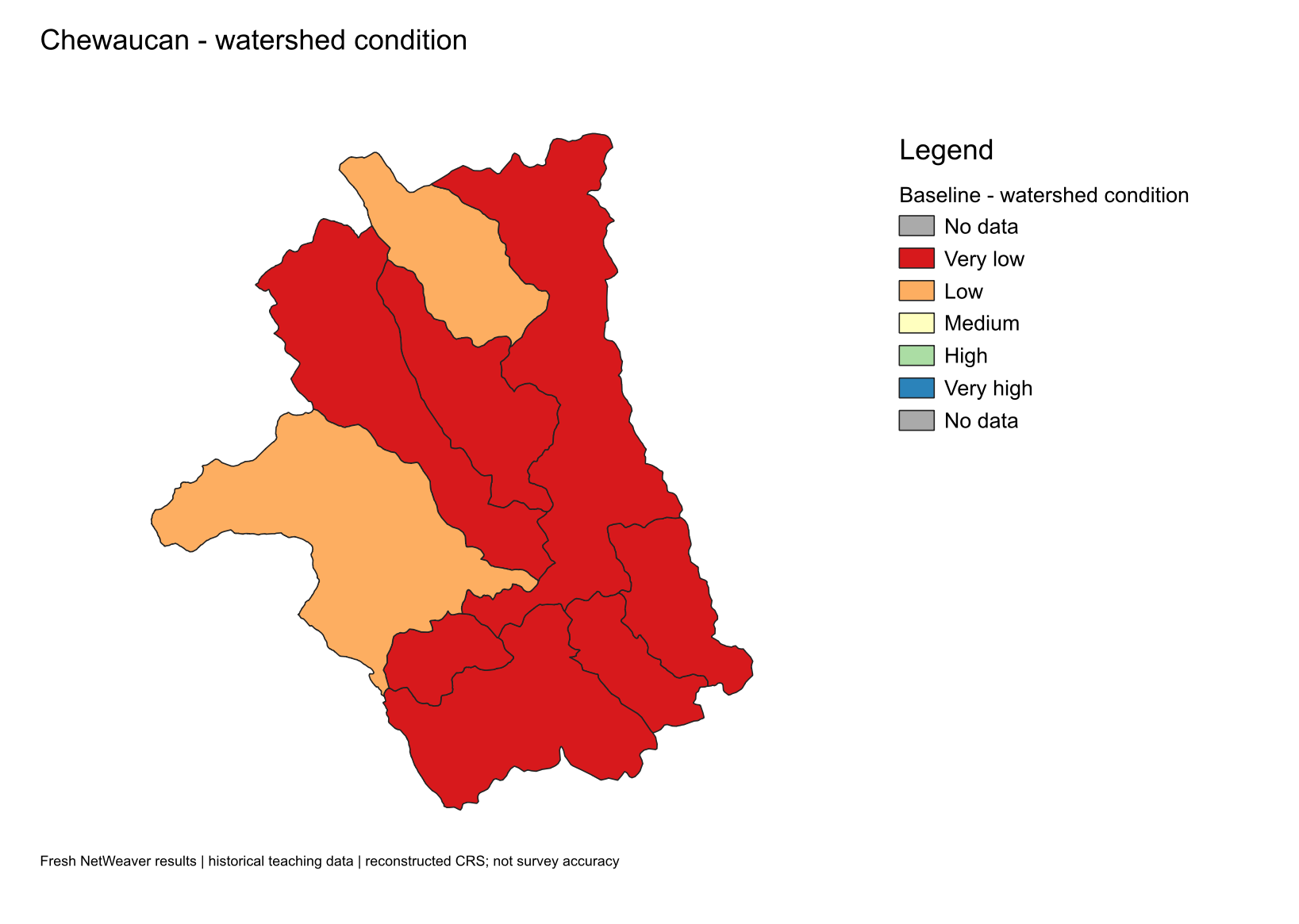
Where does condition need attention?
Explore the logic-based evidence for watershed condition.
Which alternatives come first?
See how weighted decision criteria shape management priorities.
Your first EMDS workflow,
in three short videos.
See the concepts, create a workspace, and turn an assessment into priorities. About 11 minutes, demonstrated in QGIS.
Browse the tutorial seriesWork in the GIS environment you know.
Work with your spatial data in ArcGIS Pro or QGIS. Browser-based workspaces are coming with the EMDS Online beta.
EMDS for ArcGIS Pro
Spatial assessments and decision-analysis workflows directly within your ArcGIS Pro environment.
Explore →EMDS for QGIS
NetWeaver assessments, CDP prioritization, and reusable workflows within QGIS. Review available packages for your platform.
Explore →EMDS Online
Browser-based decision workspaces. The public beta is coming soon; contact the team about participating.
Explore →AI assistance, with you in control
Ask EMDS helps you explore your project context and draft explanations of results using an optional local AI model.
Local processing
Questions and selected project context are processed on your computer using a local AI model, without cloud AI inference.
Your choice
AI assistance is off by default. Use EMDS's assessment and decision tools without enabling it, or turn it on when you want help.
Reviewable explanations
EMDS's analytical engines calculate the results. Treat AI-generated explanations as drafts and review them against the underlying models and data.
Models you can examine. Results you can explain.
EMDS brings complementary analytical tools into decision workflows. Available engines, authoring tools, and integrations vary by platform and release.
View Full Capabilities →NetWeaver
Logic network modeling for complex multi-criteria spatial analysis and condition assessments.
CDP
Criterium DecisionPlus for ranking management alternatives using weighted criteria and objectives.
BayesFusion
Bayesian belief network integration for probabilistic reasoning under uncertainty.
VisiRule
Visual rule-based decision logic for transparent, auditable decision modeling.
Built for Real-World Ecosystem Decisions
Government Land Managers
Federal and state agencies use EMDS to evaluate landscape condition and prioritize management actions across millions of acres.
Academic Researchers
Universities and research institutes use EMDS's extensible framework for novel spatial decision research and ecological modeling.
GIS Developers
Use reusable workflows and Python script tasks to prepare inputs and automate repeated analyses. Discuss host-specific integrations with the EMDS team.
A 30-Year Research Partnership
EMDS is the product of a sustained collaboration between leading research institutions, government agencies, and software developers — united by a commitment to evidence-based ecosystem stewardship.
Our partnership with the USDA Forest Service Pacific Northwest Research Station spans three decades of applied research in landscape ecology and decision support.
Get in Touch →Consortium Members
- Mountain View Business Group
- Rules of Thumb
- InfoHarvest
- USDA Forest Service
- LPA
- BayesFusion
Ready to get started?
Review desktop downloads for ArcGIS Pro and QGIS, or learn about access to EMDS Online.